Fee Download Action Research in Education (2nd Edition), by Ernie Stringer
Do you ever know the publication Action Research In Education (2nd Edition), By Ernie Stringer Yeah, this is a quite intriguing book to review. As we informed recently, reading is not type of obligation activity to do when we have to obligate. Reviewing ought to be a behavior, an excellent practice. By reading Action Research In Education (2nd Edition), By Ernie Stringer, you could open the brand-new world and also get the power from the world. Everything could be gotten through guide Action Research In Education (2nd Edition), By Ernie Stringer Well briefly, e-book is extremely effective. As what we provide you right below, this Action Research In Education (2nd Edition), By Ernie Stringer is as one of reading e-book for you.
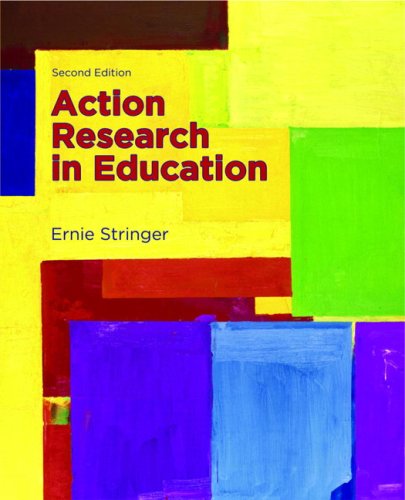
Action Research in Education (2nd Edition), by Ernie Stringer

Fee Download Action Research in Education (2nd Edition), by Ernie Stringer
Why need to await some days to obtain or receive the book Action Research In Education (2nd Edition), By Ernie Stringer that you buy? Why must you take it if you can obtain Action Research In Education (2nd Edition), By Ernie Stringer the faster one? You can locate the same book that you get here. This is it guide Action Research In Education (2nd Edition), By Ernie Stringer that you could obtain directly after purchasing. This Action Research In Education (2nd Edition), By Ernie Stringer is popular book in the world, obviously lots of people will aim to have it. Why do not you become the first? Still confused with the way?
Why need to be this e-book Action Research In Education (2nd Edition), By Ernie Stringer to review? You will certainly never ever obtain the expertise and experience without obtaining by on your own there or attempting on your own to do it. For this reason, reading this book Action Research In Education (2nd Edition), By Ernie Stringer is needed. You could be great and proper enough to obtain exactly how vital is reviewing this Action Research In Education (2nd Edition), By Ernie Stringer Also you consistently read by responsibility, you can sustain yourself to have reading publication habit. It will be so useful and also fun then.
However, exactly how is the method to obtain this e-book Action Research In Education (2nd Edition), By Ernie Stringer Still confused? No matter. You can delight in reading this e-book Action Research In Education (2nd Edition), By Ernie Stringer by on-line or soft documents. Simply download the publication Action Research In Education (2nd Edition), By Ernie Stringer in the web link provided to go to. You will obtain this Action Research In Education (2nd Edition), By Ernie Stringer by online. After downloading, you can conserve the soft documents in your computer system or gizmo. So, it will certainly relieve you to read this book Action Research In Education (2nd Edition), By Ernie Stringer in certain time or area. It may be not certain to take pleasure in reviewing this publication Action Research In Education (2nd Edition), By Ernie Stringer, since you have lots of work. But, with this soft file, you could appreciate checking out in the extra time also in the gaps of your jobs in office.
Again, reviewing habit will certainly always offer helpful benefits for you. You could not need to spend many times to check out guide Action Research In Education (2nd Edition), By Ernie Stringer Simply reserved numerous times in our spare or spare times while having dish or in your workplace to check out. This Action Research In Education (2nd Edition), By Ernie Stringer will certainly show you brand-new point that you can do now. It will aid you to boost the quality of your life. Occasion it is simply an enjoyable book Action Research In Education (2nd Edition), By Ernie Stringer, you could be happier and also a lot more enjoyable to appreciate reading.
Action research, applied systematically to the issue of poor academic performance, provides a high likelihood of improving student outcomes. The action research processes described in this book are honed by many years of successful application, and provide teachers, educational leaders, families and community members with a set of tools for engaging with significant problems in classrooms and schools. This book is designed to provide the reader with an understanding of the nature of action research and the procedures and applications of action research. In addition, it provides practical resources that add to the fundamentals of knowledge available to action researchers. The text is detailed, providing specific guidance for many of the skills that may be required for the different contexts and problems to which action research can be applied. Conceptual frameworks provide a "compass" or "roadmap" that will enable practitioners to keep track of action research processes applied to their work.
- Sales Rank: #620635 in Books
- Brand: Stringer, Ernie
- Published on: 2007-07-20
- Original language: English
- Number of items: 1
- Dimensions: 9.00" h x .60" w x 7.40" l, .99 pounds
- Binding: Paperback
- 256 pages
From the Back Cover
Action research, applied systematically to the issue of poor academic performance, provides a high likelihood of improving student outcomes. The action research processes described in this book are honed by many years of successful application, and provide teachers, educational leaders, families and community members with a set of tools for engaging with significant problems in classrooms and schools. This book is designed to provide the reader with an understanding of the nature of action research and the procedures and applications of action research. In addition, it provides practical resources that add to the fundamentals of knowledge available to action researchers. The text is detailed, providing specific guidance for many of the skills that may be required for the different contexts and problems to which action research can be applied. Conceptual frameworks provide a "compass" or "roadmap" that will enable practitioners to keep track of action research processes applied to their work.
About the Author
Ernest T. Stringer is author of numerous influential books on action research, including Action Research in Education (2008), Action Research in Health (with Bill Genat, 2004), and Action Research in Human Services (with Rosalie Dwyer, 2005). After an early career as primary teacher and school principal, Stringer served as lecturer in education at Curtin University of Technology in Western Australia. From the mid-eighties, based at Curtin s Centre for Aboriginal Studies, he worked collaboratively with Aboriginal staff and community people to develop a wide variety of innovative and highly successful education and community development programs and services. As visiting professor at the University of New Mexico and Texas A&M, he has taught research methods courses and engaged in projects with African American and Latino community and neighborhood groups. As a UNICEF consultant, he recently engaged in a major project to increase parent participation in the schools in East Timor. Stringer has served (until prior to publication of this book) as a member of the editorial board of the Action Research Journal and is past president of the Action Learning and Action Research Association (ALARA).
Excerpt. © Reprinted by permission. All rights reserved.
Research—A Personal History
Research has been part of my life since my childhood. At school I "researched" topics for class, carefully gathering material and sorting through it to select the most relevant information with which to formulate papers or presentations. In a high school physics class, I engaged in a small experiment with my teacher and classmates on a sports field. We used an empty can and a stopwatch to estimate the speed of sound. At that time, I also became fascinated by theories and experiments in cosmology and particle physics, which began a life-long fascination with explanations of the nature of the physical universe. As I write this book, I am struggling to read and understand Fire in the Mind (Johnson, 1995), which seeks to elucidate the ways scientists try to explain the puzzling phenomena coming to them from the infinitely regressive micro-world of particle physics, and to juxtapose these explanations with theories emerging from their investigations of deep space—the cosmos.
These first forays into the field of research expanded dramatically when I entered university and teacher training. In these contexts, I explored material derived from a wide range of experiments in the behavioral sciences, providing information about intelligence, personality, learning processes, child development, teaching strategies, and a host of related topics. This information helped me to grasp some of the fundamental features of human life—to know how and why people behaved as they did—and enabled me to understand more clearly how I could teach children effectively. This knowledge, sometimes laboriously acquired in education, psychology, and sociology classes, provided a wealth of information that still informs my educational practices. I've learned to understand the varying capabilities, capacities, and behaviors of young children as they grow into adulthood. I understand more clearly the conditions under which learning takes place and the different factors influencing educational achievement. As an experienced educator, I now draw from a considerable stock of knowledge as I organize the teaching/learning processes with the diverse groups of students who enter my classes.
When I entered graduate school, my first research methods classes showed how these experiments were constructed and enacted and showed me how survey research, sometimes called quasi-experimental research, could further extend my understanding of the very complex problems involved in educating diverse populations. I learned how to perform research investigating the effects of factors like social class, gender, culture, and language on educational achievement, and to structure investigations exploring their relationship to employment, income, health status, and so on. Not only were my research skills increasing dramatically, but I was able to link knowledge available from research studies to theories of education, human behavior, and the social world.
Research, therefore, has informed my educational practices and made them increasingly sophisticated and effective. I have become aware, however, of the limitations of the often abstract and highly generalized nature of much of the information I derive from the research literature. Much of it is compelling and makes a great deal of sense within the sophisticated and complex explanations contained with the theories of the academic disciplines—psychology, sociology, anthropology. But I have also learned that much of this theory is often irrelevant and lacks meaning or utility when applied to many of the deep-seated and long-term problems people experience in classrooms and schools.
Although I became aware of these limitations as a graduate student at the University of Illinois, the full force of this paradox became apparent in the early 1980s when I started to engage in work in Aboriginal communities in remote regions of Australia. In these contexts, the sophistication and breadth of my academic expertise proved illusory, and the concepts and theories of behavioral and social theory were lacking in substance or function. As I helped people in these places come to grips with the difficult and multifaceted problems they faced in their everyday community life, I learned a decisive lesson about the nature of knowledge and its application to everyday life. I learned that the sophisticated knowledge emanating from academic understandings often had little relevance in these contexts.
Even today, if you visit a remote Aboriginal community you will see the tattered remnants of community gardens developed with great skill using the best information and technology available from horticultural science. What is not evident is the place of gardening in the life of a desert people still heavily instilled with the cultural perspectives of the hunter-gatherer. You can see their counterparts in schools in urban and suburban America, where dusty boxes of unused materials remind us of yet another quick-fix program developed and funded, for a time, to deal superficially with some deep-seated educational issue.
At this time, I also learned how people's own knowledge and wisdom were often more useful in working toward solutions to the problems they faced. A clear instance emerged during a visit to a remote community where the people, becoming tired of the inadequate and damaging education provided for their children, set up a school themselves. Despite inadequate classroom accommodation and a dearth of books, materials, and equipment, the community school provided one of the most exciting educational experiences for children I have witnessed. Although they were assisted in this process by a non-Aboriginal teacher who lived with them and provided her expertise, the school was structured and operated on the basis of educational processes and a style of operation that "made sense" to the lifestyle and life-ways of local people—their culture. Though very different, in many respects, from traditional schools, it was very effective in providing an effective and relevant education for the children of this community.
At that time, I was unaware that I had witnessed what was, in effect, the outcome of an action research process. The people had started with a problem—providing adequate schooling for their children—and worked toward a solution. They also gained information and expertise as they acquired the understanding necessary to organize their school. Each of the many questions involved in developing a fully functioning school—how to build classrooms, how to hire and pay a teacher, how to develop a curriculum, how to organize a timetable of learning, and more—became subjects of investigation. As they developed their understanding of each of these issues, people were able to map out the actions required to bring this part of the puzzle into operation. They started with a little understanding of what they wished to achieve and worked systematically to acquire the knowledge leading to a solution to their problem—a classical action research process.
That experience has changed the way I now view research and the way I engage in research processes. For me, the process of research central to my professional and community life is participatory action research. It requires me to work with people to assist them in making use of their own understandings and expertise—to use their experience and local wisdom to work systematically through a process of investigation to acquire deeper, broader, and more effective understandings that enable them to develop workable solutions to the problems they investigate.
Although I still appreciate my extensive academic and professional knowledge, I engage it warily, sensitive to the need for people to conceptualize and understand issues in terms that make sense in their everyday lives. I, therefore, provide my professional expertise gently and with humility—always providing opportunities for people to reject or modify ideas I might inject into an investigation. In a recent community-based research project, I provided neighborhood parents with a list of questions to use in interviews. I presented them as examples of the type of questions they might ask and was pleased to see them accept the general approach to interviewing, but to tell me "You can't ask that question like that! You'd have to say. . . ," and then start to formulate questions of their own.
Research has become a much broader set of activities than those I initially learned in my experimental and survey research classes. According to the issue, the context, and the purpose of research I may now choose from a wide array of approaches and methods to satisfy the needs of the project in hand. Since I largely work as a consultant, however, helping people find solutions to particular problems, I rarely engage in experimental or survey research. In school settings, I assist educators and families in improving their educational practices or in evaluating, planning, or implementing educational programs and services. This is the work that informs my educational understandings and forms the basis for the examples and illustrations of action research processes in this book.
The effectiveness of this approach to research is demonstrated by the degree to which teachers in the United States have been able to apply successfully my models of research. Their work extends in range and variety across age groups, grade and school levels, and across regions. Educators from preschool to university graduate classes successfully apply research processes to enhance their educational practices or to find solutions to significant problems. Stories from their experience permeate the pages of this book and illustrate the ways action research has been used in schools.
The stories also include accounts, however, of the way action research has been used in the community to assist educators in making effective links with parents and other neighborhood groups. Stories demonstrate the continuing ways ...
Most helpful customer reviews
3 of 3 people found the following review helpful.
Reference book
By Dr. D.
This book looked appealing, but I didn't feel like there was much meat to the information. I was required to use this book for my class, but I found another book that was easier to understand and was more user friendly.
1 of 1 people found the following review helpful.
ActionResearch
By dpatz
Good Book for learning about Action Research. Easy read, short, simple, to-the-point. I recommend this to anyone who is pursuing a degree in Education.
0 of 0 people found the following review helpful.
In great condition!
By Joyce
Reads easily, medium print. Content seems reasonable and accessible. I read through the first two chapters quickly and am fairly impressed so far. As far as technical literature goes, it is an easy read.
See all 8 customer reviews...
Action Research in Education (2nd Edition), by Ernie Stringer PDF
Action Research in Education (2nd Edition), by Ernie Stringer EPub
Action Research in Education (2nd Edition), by Ernie Stringer Doc
Action Research in Education (2nd Edition), by Ernie Stringer iBooks
Action Research in Education (2nd Edition), by Ernie Stringer rtf
Action Research in Education (2nd Edition), by Ernie Stringer Mobipocket
Action Research in Education (2nd Edition), by Ernie Stringer Kindle
[N700.Ebook] Fee Download Action Research in Education (2nd Edition), by Ernie Stringer Doc
[N700.Ebook] Fee Download Action Research in Education (2nd Edition), by Ernie Stringer Doc
[N700.Ebook] Fee Download Action Research in Education (2nd Edition), by Ernie Stringer Doc
[N700.Ebook] Fee Download Action Research in Education (2nd Edition), by Ernie Stringer Doc